
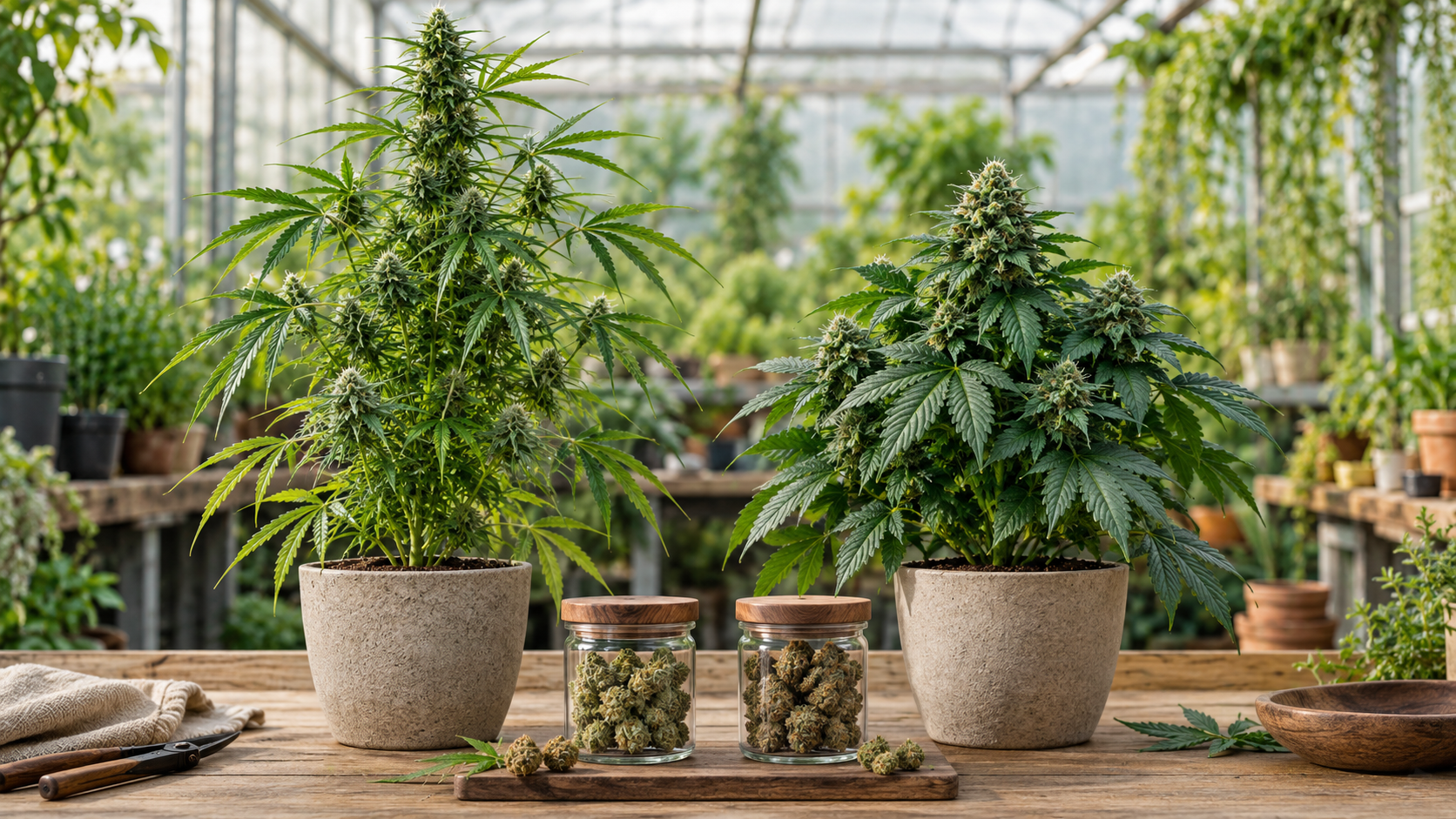
The Difference Between Indica and Sativa Explained
The difference between indica and sativa began with plant classification, shape, and geographic history. In modern stores, the labels often suggest a type of experience. Yet today’s products have mixed ancestry, and research shows the two labels cannot reliably predict how a product will affect each person.
Key Takeaways
- The terms first described plant traits and origins.
- Modern retail use often links sativa with daytime and indica with evening.
- Those effect claims are common descriptions, not guarantees.
- Years of crossbreeding have blurred old family lines.
- Tested chemistry, format, amount, and personal response offer more context.
- The label can begin a discussion but should not end it.
Where the Two Names Came From
The original difference between indica and sativa begins with plant names and traits.
Botanists used Cannabis sativa and Cannabis indica to describe plants that seemed different in form or origin. Traditional descriptions often show sativa plants as taller with narrower leaflets. Indica plants are often shown as shorter and bushier with wider leaflets.
Those descriptions can help discuss how a plant grows. They do not prove what a finished flower, vape, concentrate, or edible will feel like.
The historical difference between indica and sativa is therefore not the same as the retail difference shoppers hear today.
Modern cannabis has been selected and crossed for many traits. Growers may work for yield, aroma, cannabinoid content, growth time, resistance, or other goals. Mixed ancestry is now common.
How Retail Labels Are Commonly Used
The retail difference between indica and sativa is built around familiar market language.
On a menu, sativa often means a product is marketed as bright, active, or suited to daytime. Indica often means it is marketed as calm, heavy, or suited to evening.
Hybrid is used for products said to have traits from both. Some menus add sativa-dominant or indica-dominant.
These words help stores organize many products. They also make comparison easy for a shopper who already knows the terms. The problem begins when common descriptions become fixed promises.
No label can promise energy, focus, relaxation, sleep, pain relief, or another health result. The difference between indica and sativa on a menu is often a broad market signal, not a complete scientific profile.
What Genetic and Chemical Research Shows
Researchers have tested whether commercial labels match clear genetic or chemical groups. The results call for caution.
A study of cannabis labeling and genetic variation found that products labeled sativa and indica were not genetically distinct at the scale of the whole genome. Some label differences were linked with certain terpenes, which may help explain aroma-based naming.
A separate study of commercial cannabis chemistry found that products did not form three clear chemical groups based on the common sativa, indica, and hybrid labels.
This evidence does not erase the words from cannabis culture. It changes how carefully we should use them. The scientific difference between indica and sativa is not a clean two-box system for modern retail products.
Plant Traits and Product Traits Are Different
This difference between indica and sativa becomes clearer when plant growth and finished goods are separated.
A plant can look tall or compact during cultivation. A shopper buys a finished product that has been harvested, dried, processed, tested, and packaged.
The finished item may be flower from one batch. It may also be an extract used in a cartridge, concentrate, or edible. Processing and serving size add details that a plant-family label cannot show.
| Area | Traditional Sativa Description | Traditional Indica Description | Better Retail Check |
|---|---|---|---|
| Growth form | Taller, narrower leaflets | Shorter, wider leaflets | Not usually shown on a package |
| Market language | Daytime or uplifting | Evening or relaxing | Treat as a description, not a promise |
| Chemistry | No single required profile | No single required profile | Read current cannabinoid and terpene results |
| Expected effects | Often stated too broadly | Often stated too broadly | Consider amount, format, and personal response |
This table makes the difference between indica and sativa easier to use without confusing plant form with guaranteed effects.
Cannabinoids Give Important Context
Cannabinoids show why the difference between indica and sativa needs tested numbers.
Cannabinoids include THC, CBD, CBN, CBG, and many others. THC is the main intoxicating compound in marijuana. CBD is not intoxicating in the same way.
Read the actual THC and CBD values on the package. The product name or category does not tell you the amount. Two items under the same label can have very different numbers.
More THC can mean more impairment and a greater chance of an unwanted response. Higher-THC products are not automatically better. The National Institute on Drug Abuse notes that amount, potency, ingredients, method, personal biology, experience, and other factors may shape effects.
For an adult buyer, cannabinoid facts are more useful than assuming the difference between indica and sativa is a fixed feeling.
Terpenes Add Aroma Information
Terpenes add aroma detail to the difference between indica and sativa.
Terpenes are natural aroma compounds. Cannabis and many familiar plants contain them. A tested product may list myrcene, limonene, pinene, caryophyllene, linalool, or other terpenes.
These details can help a shopper compare scent and flavor. They may also help explain why some products receive certain retail labels.
Research does not support turning one terpene into a guaranteed result. A limonene listing does not promise energy. A myrcene listing does not promise sleep. Human studies remain limited for many product-specific claims.
Terpene information can add depth to the difference between indica and sativa, but it still does not predict a response by itself.
Format, Amount, and Timing Matter
Flower and pre-rolls are inhaled when smoked. Vapes heat cannabis oil. Concentrates can carry high THC levels. Edibles pass through the digestive system and can take longer to produce effects.
An indica edible and an indica pre-roll do not have the same use method or timing. A sativa flower and a sativa concentrate may contain very different THC amounts.
The CDC cannabis FAQ says cannabis products with THC carry health risks regardless of method. It also warns that eating or drinking cannabis can lead to delayed or less predictable effects.
Use the package serving information. Do not take more simply because the expected feeling has not begun. Format and amount can matter more than the difference between indica and sativa printed on the menu.
A Smarter Way to Choose a Product
Use the difference between indica and sativa as one clue within a larger checklist.
Begin with the decision that can be checked. Choose a format you understand. Confirm whether a device is needed. Read the package amount, serving size, THC, CBD, ingredients, and warnings.
Then ask about the specific batch. Useful questions include:
- What does the tested label show for THC and CBD?
- Which terpenes are listed, and what aromas are common for them?
- Is this pre-roll infused or made only with flower?
- How many servings are in this edible?
- Does this vape cartridge fit a 510-thread battery?
Good Nature works across cultivation, manufacturing, and retail. Our products include premium flower, straight rolls, and 510-thread vape cartridges. This seed-to-sale view helps our team explain the item itself instead of treating the difference between indica and sativa as the only fact that matters.
Adults may review the Good Nature Wareham menu before visiting. Live stock and batch details may change.
Personal Response Cannot Be Guaranteed
Two people may respond differently to the same product. One person may also have a different experience on another day.
Food, sleep, mood, setting, medicines, other substances, past cannabis use, and the amount used may all matter. Mixing cannabis with alcohol or other drugs can increase impairment.
No budtender, label, or article can promise a result. Speak with a qualified healthcare professional if you have a medical concern, take medicine, or are pregnant or breastfeeding.
The most useful difference between indica and sativa is the difference you can verify on the current package, not a result someone promises.
Frequently Asked Questions
Is there a scientific difference between indica and sativa?
The terms have botanical and historical roots, but modern commercial products do not fall into two clear groups that reliably predict effects. Genetic and chemical studies show weak alignment between common retail labels and the full makeup of a product. Read the current tested label for useful product facts.
Why do dispensaries still use these labels?
The labels are familiar and help organize large menus. They can also describe a product’s marketed style or family. A good retail explanation treats the words as a starting point. It should not promise that every sativa feels active or every indica feels calm.
Can two products with the same strain name be different?
Yes. Genetics, growing conditions, harvest, processing, and batch results can vary by producer. Two packages with the same name may show different THC, CBD, or terpene values. Review the producer, batch label, test results, format, and serving information before making a choice.
Should I choose cannabis only by THC percentage?
No. THC is important because it is intoxicating, but one number does not describe format, serving size, ingredients, aroma, or personal response. More THC may raise impairment and unwanted effects. Choose a product whose label and use method you understand.
Which label is best for sleep or pain?
Neither label can guarantee sleep, pain relief, or treatment of a condition. Retail cannabis should not replace medical advice. Speak with a qualified healthcare professional about symptoms or medicine interactions, then ask a budtender for factual product and label information.
Visit Good Nature With Better Questions
Find our Wareham, Central Square, and Harvard Square shops on the Good Nature locations page. Bring a valid ID and ask our team to explain the format, tested label, and current batch.